
Beyond the Trophy: Strategic Leadership Lessons from England’s Euro 2025 Triumph—By Dr (HC) Prachetan Potadar

Introduction: A Victory Beyond the Final Whistle
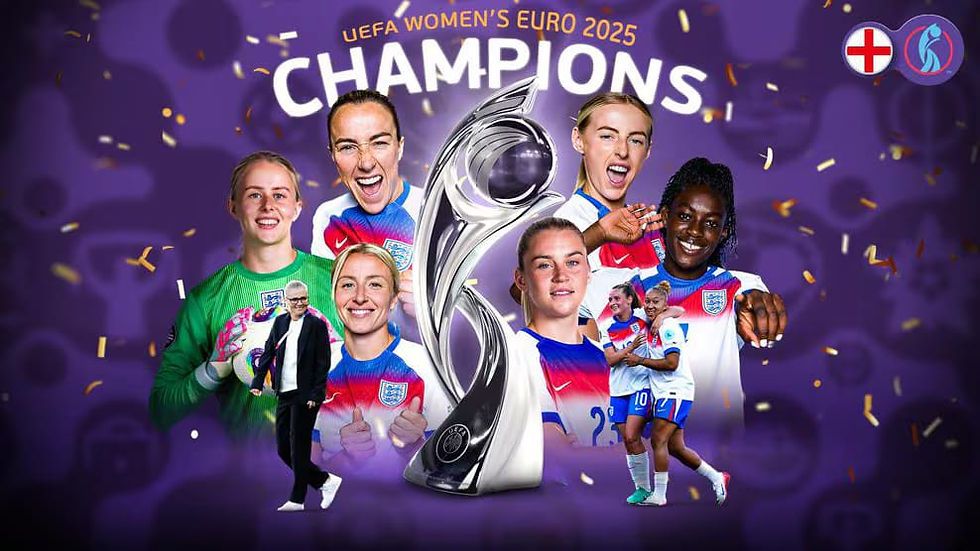
England's 3–1 win in the penalty shootout against Spain in the UEFA Women’s Euro 2025 final, following a tense 1–1 draw in Basel, was more than just a sporting achievement—it served as an insightful management case study in trust, composure, systems thinking, and long-term strategic planning.
While fans celebrated back-to-back Euro titles for the Lionesses, those observing through a leadership lens saw a masterclass in team cohesion, resilience under pressure, and the ongoing battle for equity in the global sports economy.
1. Tactical Execution Meets Strategic Consistency
Spain took the lead in the 25th minute with a precise header from Mariona Caldentey. However, England maintained their composure and responded with discipline. Substitute Chloe Kelly delivered a perfect cross to Alessia Russo, who levelled the score in the 57th minute. The rest of the match, including extra time, was characterised by a strategic stalemate.
Sarina Wiegman, England’s manager, made only two substitutions throughout the entire 120 minutes. This wasn’t inertia—it was intent. Her strategy wasn’t about rotation, but about rhythm. By reinforcing structure and preserving on-field chemistry, she ensured that fatigue didn’t lead to chaos.
Management Insight:
In high-stakes environments, excessive change can unravel cohesion. Know when to intervene—and when to trust your system.
2. Composure as a Competitive Edge
The penalty shootout showcased England’s psychological edge. Goalkeeper Hannah Hampton saved efforts from both Caldentey and Aitana Bonmatí. Chloe Kelly, whose nerves could have buckled under the weight of expectation, coolly slotted in the winner.
The post-match scenes weren’t just of elation—they were reminders that pressure reveals the depth of preparation.
Management Insight:
Crisis moments are not exceptions—they are inevitabilities. Teams that rehearse high-pressure scenarios (and build trust in each other’s roles) are best poised to respond under fire.
3. Leadership that Whispers, Not Shouts
Unlike the boisterous, animated sidelines often seen in elite men’s tournaments, Wiegman’s leadership style was quiet, clear, and deeply focused. She operated like a systems architect—building a structure before the game that required minimal correction during it.
Her players mirrored that calm. Millie Bright and Alex Greenwood absorbed Spain’s intricate movements, not with aggression but with proactive positioning and zone awareness.
Management Insight:
Effective leaders create conditions that make themselves nearly redundant in the moment of action. It’s the strategy that echoes louder than instructions.
4. Reality Check: When a Win Isn’t Equal
While England’s win was historic, the surrounding ecosystem of women’s football still reveals harsh disparities:
Prize Pool Disparity:
UEFA Euro 2025 offered €16 million in total prize money. In contrast, the men’s Euro 2024 pool stood at €331 million—a nearly 20-fold gap.
Broadcast Inequity:
Despite stellar performances, the final lacked prime-time slots in multiple top-tier markets. Even England’s previous title win received a secondary promotional push.
Undervalued Icons:
Chloe Kelly’s critical contributions came alive in headlines only after her winning goal. Pre-match coverage still centres men’s narratives—even in all-women’s events.
Management Insight:
Winning the race isn’t enough if the road remains uneven. Systemic bias limits return on investment—leaders must address foundational inequality alongside performance.
5. The Statistical Landscape: What Numbers Reveal
While celebration is warranted, data tells a more nuanced story about women’s football in Europe:
Participation Growth:
Girls’ football saw a 40% rise in enrollment since 2020. However, less than half of national federations have increased proportional investment in infrastructure or training.
Viewership vs Sponsor Engagement:
The Women’s Super League (WSL) experienced a 35% viewership surge in 2024. Yet, sponsor activation only grew 9%, indicating a mismatch between attention and commercial conversion.
Wage Inequality:
A staggering 90% of female professionals in European leagues still earn under €30,000 annually, while men in comparable leagues often earn €1 million.
Management Insight:
Growth in audience and participation is futile without institutional follow-through. Success must trigger sustainable systems—marketing, funding, and visibility must follow momentum.
6. Strategic Takeaways for Leaders
Whether you manage a football team or a Fortune 500 boardroom, England’s journey offers transferable insights:
System Trust Over Micromanagement:
Build a reliable framework and empower people to operate within it.
Scenario Preparedness:
Don’t just prepare for what should happen. Train for what could happen—especially under pressure.
Culture Before Results:
Trophies are outputs. Culture is the enduring strategy.
Visibility Drives Equity:
Recognition must precede success, not just follow it. Acknowledging potential early boosts morale and market value alike.
Measure What You Value:
Invest where you want returns—not just in numbers, but in stories, safety, and long-term legacy.
7. The Big Picture: Legacy, Not Just Headlines
England’s Euro 2025 win wasn’t just a victory over Spain. It was a victory over underestimation. Over fatigue. Over systemic disregard.
But one win doesn’t close the gender gap. Women’s football remains underfunded, under-promoted, and underpaid—despite its undeniable talent, storytelling potential, and emotional resonance with fans.
The next phase of evolution will require more than trophies. It’ll demand boardroom allies, media consistency, infrastructure equity, and policy reform. Until then, each on-field win must catalyse off-field change.
Leadership is not just about lifting cups. It’s about lifting standards.
About the Author
Dr (HC) Prachetan Potadar is a strategist, storyteller, and systems thinker with dual honorary doctorates in Media Leadership and Cultural Management. Known for merging poetic sensibility with management acumen, he is the voice behind “PenPaperPrachetan” and an advisor to TEDx platforms across Asia. With extensive work in sports narratives, gender equity, and legacy design, Dr Potadar champions the idea that behind every historic win lies a deeper systemic message—one that leaders must read, respond to, and reimagine. His work spans the intersections of storytelling, leadership, and institutional reform, especially within emerging cultural economies.


Comments